

The History of The Glendale Farm
The Glendale Farm has been worked continuously since 1857, which makes it one of the oldest farms still in production on the Olympic Peninsula and one of the largest single agricultural properties left in Jefferson County.
1857: the homestead
TK — who filed the claim, under what act, and what first went in the ground.
The people who worked it
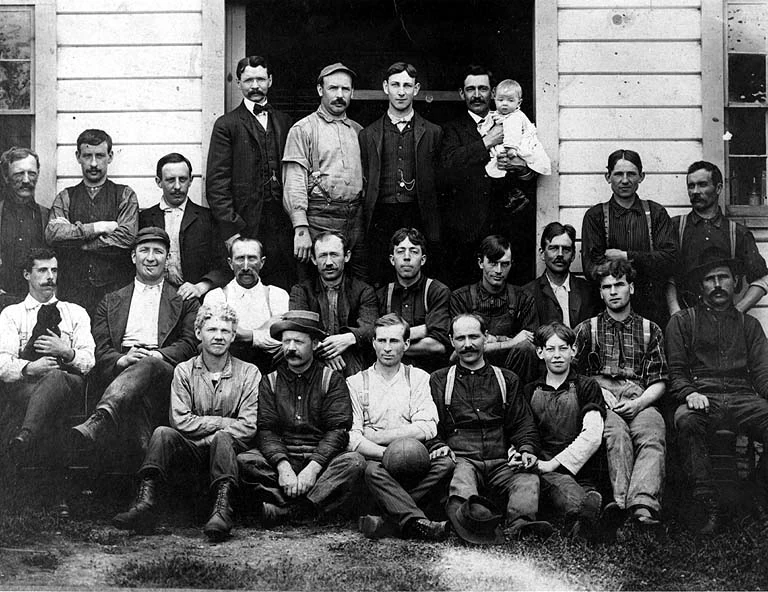
Twenty-six or so of them, posed against the boards of a farm building about 1895 — one man holding a baby, another a dog, a football on the grass at the front. It is the oldest known photograph of this farm’s people, and the name on it is Glendale Dairy.
The house that William Bishop built
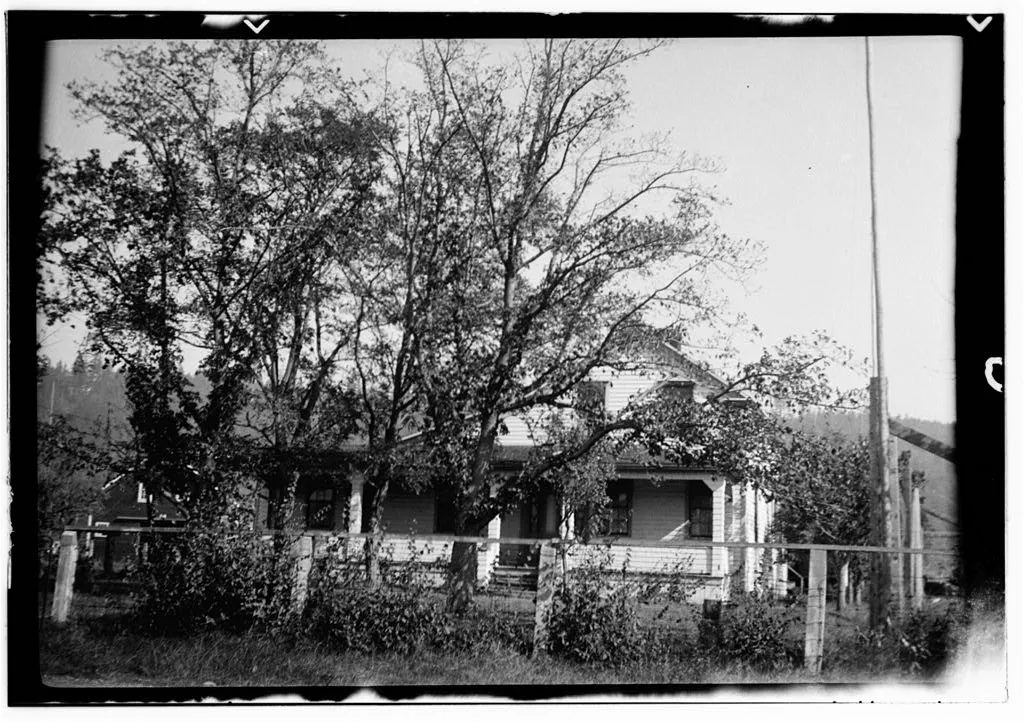
In 1936 a federal survey team working out of Seattle documented a two-storey frame house at Chimacum called Glendale House. Their record gives a date of erection of 1860–65 and names the builder as William Bishop. They noted a frame building with exterior siding, a pitched shingle roof, and a brick chimney, and recorded its condition as good. The survey was carried out under the Works Progress Administration by district officer Louis Baeder, and filed as HABS WA-74.
The name, the place, and the period all line up with this farm, and a house finished in the early 1860s sits comfortably behind an 1857 claim — but the survey record does not say “Glendale Farm.” TK — confirm with the client whether the house in this 1936 photograph is the one still standing on the property. If it is, this is the oldest known image of the farm and belongs at the top of this page.
A valley of farms
The same 1936 survey documented four other buildings within a few miles: the Steven Bishop House — recorded as the son’s house — the Nisbet Barn on Valley Road, the Westergard House on West Valley Road, and the Peterson Place. Together they are a portrait of the Chimacum Valley as a working agricultural district, which is what it has remained.
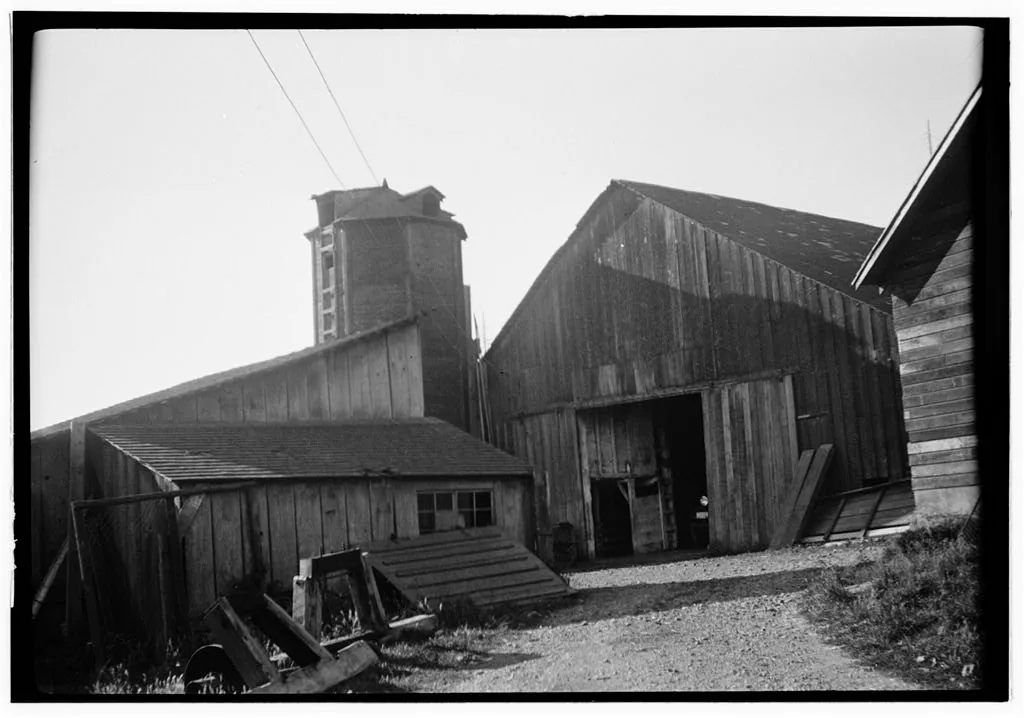
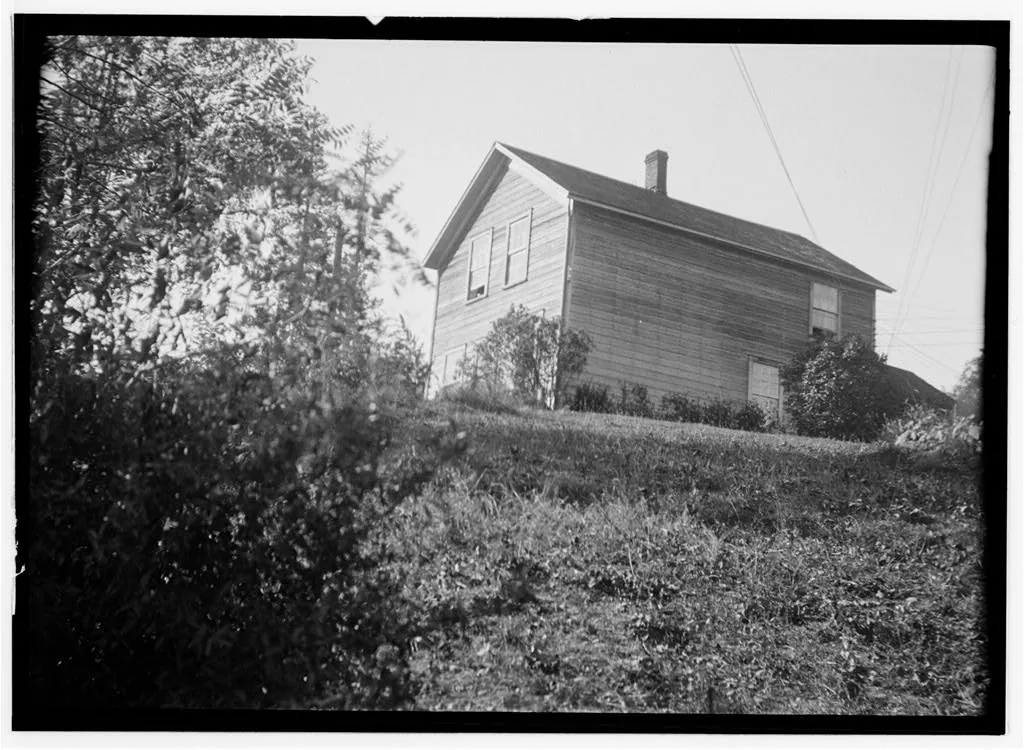
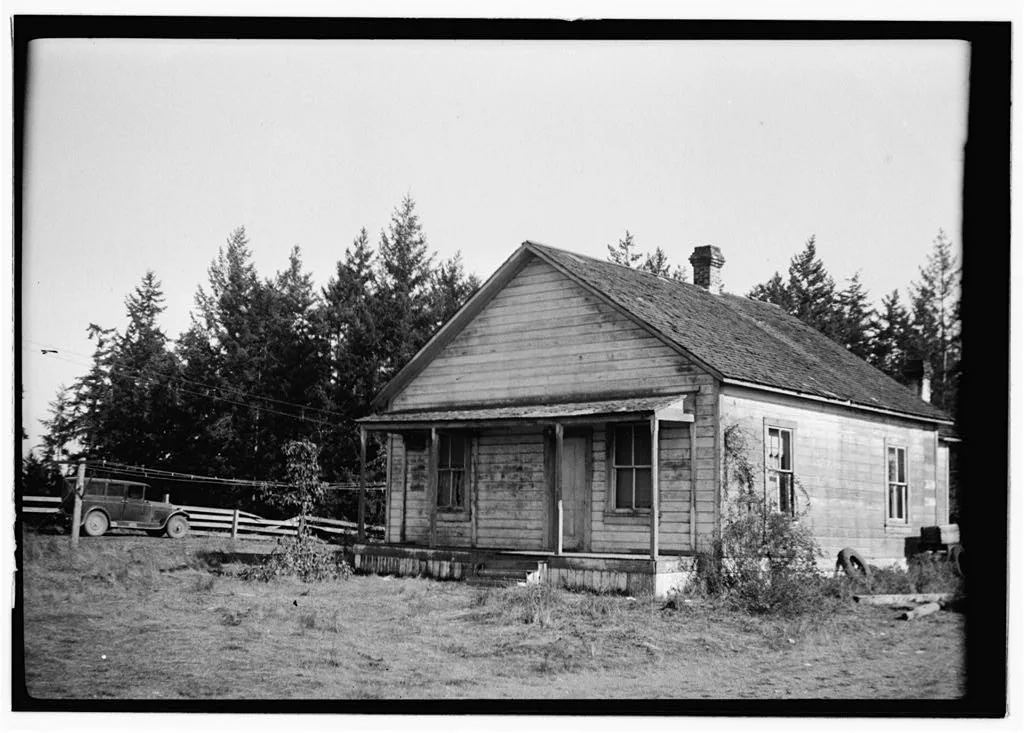
All three: Historic American Buildings Survey, 1936. Library of Congress Prints & Photographs Division.
Before the farms
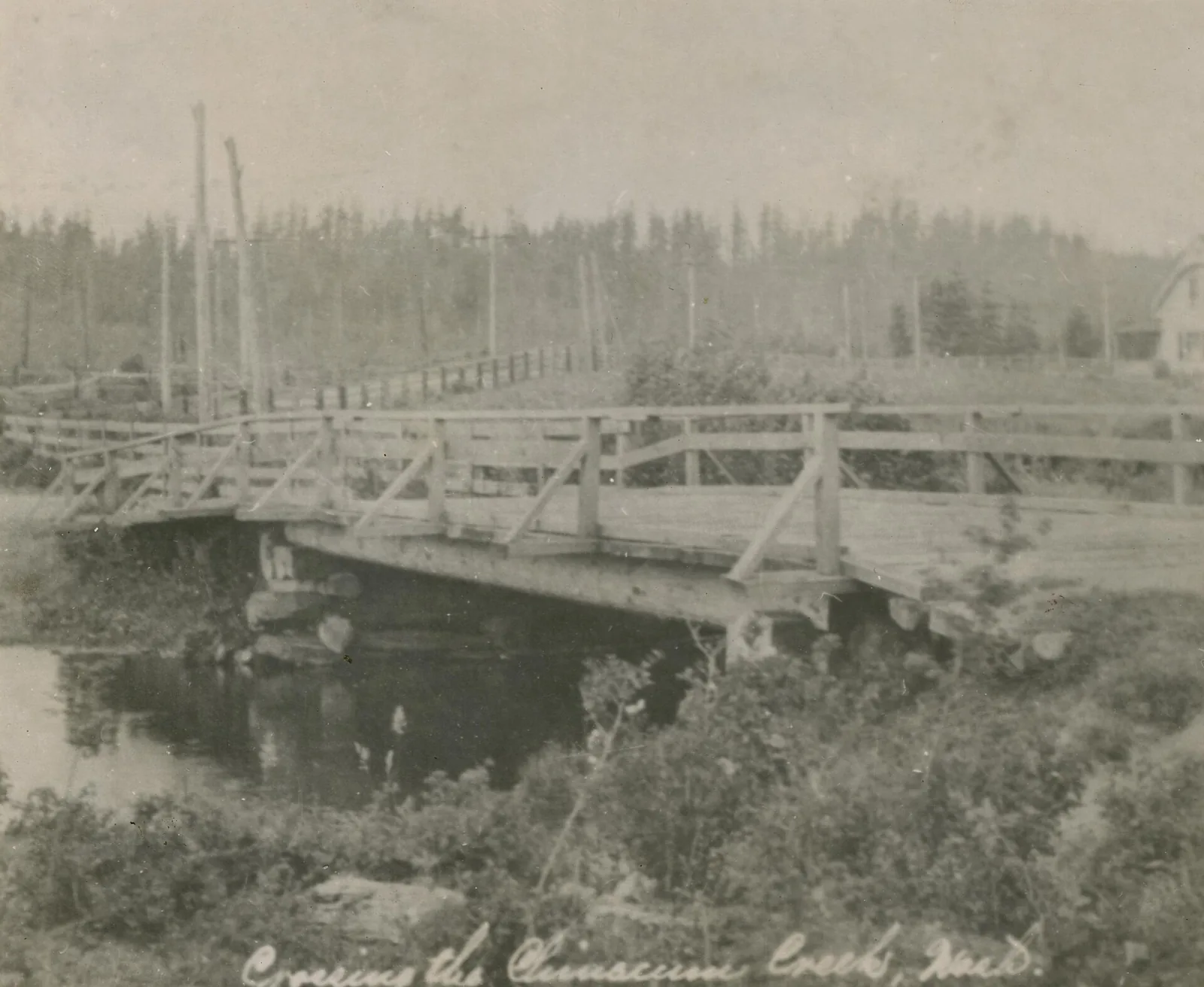
The valley takes its name from the Chimakum people, who lived on this ground long before it was surveyed into claims. TK — this deserves more than a sentence, and it should be written with the Chimacum community rather than about them. Ask the client before publishing.
How the farm came to be protected
Jefferson Land Trust worked with Jefferson County and the Jefferson LandWorks Collaborative to purchase the development rights and place the farm under a permanent conservation easement. The purchase drew on Washington Wildlife and Recreation Program farmland preservation grant funds, Jefferson County Conservation Futures funds, and community contributions. The WWRP grant also carried funding to restore critical irrigation infrastructure.
The easement is permanent. The land can be farmed; it cannot be developed.
The farm today
Five working farms lease ground here, and the property carries campsites, an events venue, equestrian facilities, and cold storage. More about how the farm is run → · Meet the farms →
Sources
- Historic American Buildings Survey, HABS WA-74, Glendale House, Chimacum, Jefferson County, WA — Library of Congress, loc.gov/item/wa0042
- Companion surveys HABS WA-71, WA-72, WA-73 and WA-75 for the Bishop, Nisbet, Westergard and Peterson buildings
- Glendale Dairy farm workers near Chimacum, about 1895 — University of Washington Libraries, Special Collections, negative UW5134 (permission required — see the media inventory)
- Port Townsend Leader archive, University of Washington Libraries — including the January 1906 notice of William Bishop Sr.’s death
Updated TK month year